Taste
Our sense of taste at first glance might not be seen as particularly important in the study of consciousness and meditation.
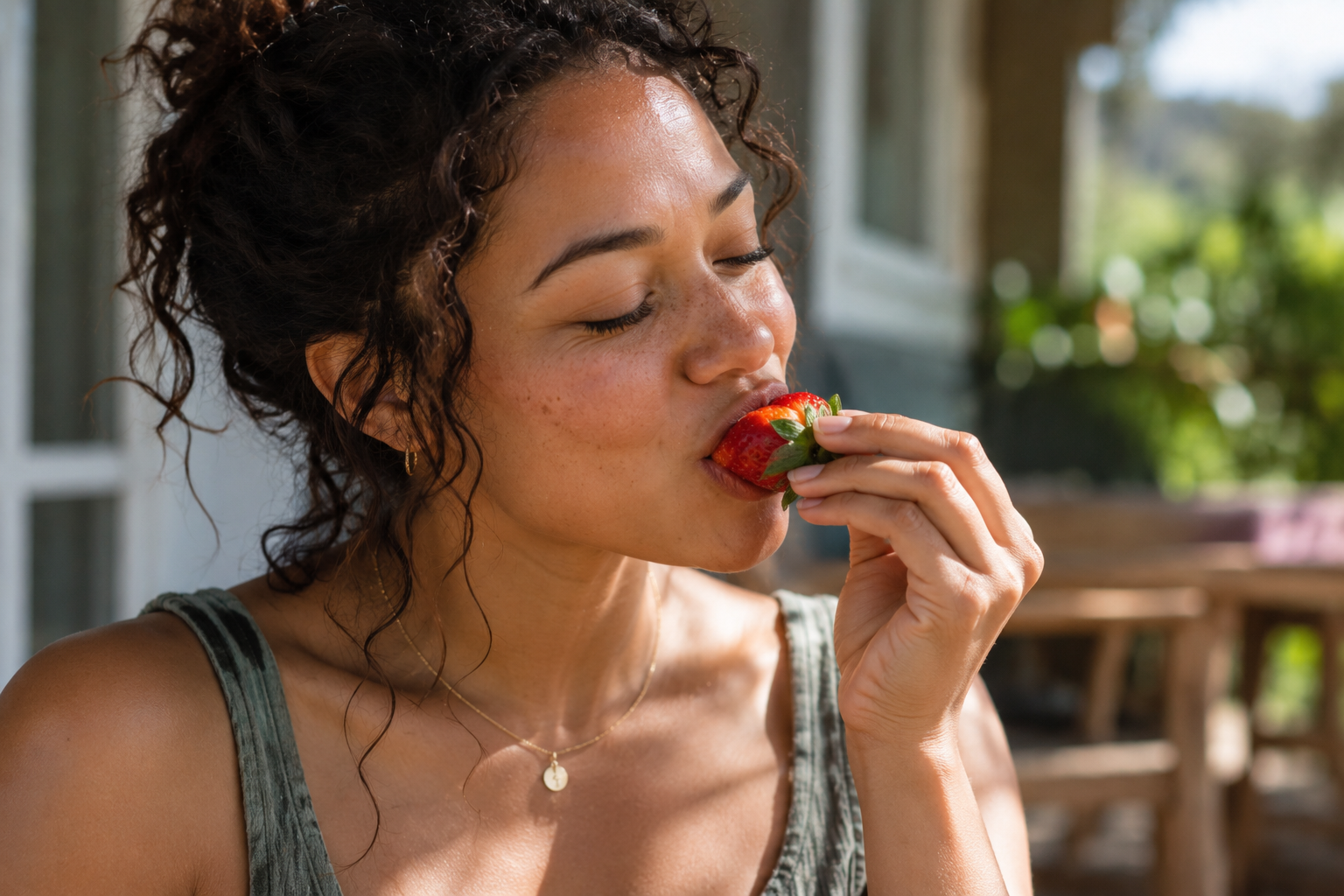
Our sense of taste at first glance might not be seen as particularly important in the study of consciousness and meditation.
Yet our sense of taste is an exceptionally influential and important sense in our lives. Eating is a fundamental human activity. If we don’t eat, we don’t survive. Our sense of taste guides us to eat things that are not going to poison us, thus playing a key role in keeping us alive.
We can quickly tell if food is bad as soon as we taste it. The sensory experience of food that tastes really really good can sometimes be some of the most intense and memorable experiences of our lives. The taste of exceptionally well-prepared food, such as in a top-class restaurant, can often make an immense impact, and be a defining moment in our lives. The intensity of that experience for their customers is the reason that the very best restaurants can charge what most people earn in a week for just a single meal, and be booked out for months in advance.
The taste of foods also has highly emotional connections for most people. Throughout our lives, certain tastes are strongly connected with family and the experience of being cared for by our parents, grandparents, partners or others who play a significant role in our lives. These associations can be complex and are often embedded deep in our subconscious mind. Most people have elaborate stories about taste, eating, and meals, and the associations that certain meals, rituals, and foods have in their past and present. Think back to the last dinner party you had with friends. Did food, eating or dining experiences come up in conversation at least once? Chances are pretty high that it did.
Taste and food can confer social status, importance, wealth, or rarity. Think about the importance placed on the taste of a wedding cake prior to a wedding. Certain foods and tastes are associated with status, wealth and prestige, with ceremonies and rituals, or with rites of passage to adulthood. Each of us has taste preferences and dislikes, and these may change over time, or be influenced by positive and negative experiences.
Our objective with our consciousness sense of taste is not only to become more aware of the taste of what we eat and drink, but to become more aware of the impact taste has in our lives. Training our consciousness sense of taste is to become more deliberate in everything related to our eating and drinking habits. When we eat, drink and taste more consciously, by directing all our attention to our sense of taste, we are practicing a form of consciousness training.
Next time you eat, take just a few extra seconds to fully appreciate as many of the nuances of the food or drink you are consuming. Notice the sweetness, the acidity, the sourness and saltiness, the texture of the food. If you are drinking, notice the speed you drink, the position of taste on your tongue and mouth, the heat or coldness of the fluid as you swallow. Then, notice your emotional response. Is there an immediate reaction, of satisfaction, need or even compulsion? Are you in control of your desire for a particular food? Is eating mechanical, pleasurable, guilt inducing or neutral? Are the eating habits you notice you want to change, just by noticing the influence of your sense of taste?
Food is critical to our health. Yet it is also a highly dysfunctional issue for millions of people. Obesity rates in most western countries are rising, particularly in the United States. The cost of obesity to society in terms of increased health issues and lower life quality is enormous. The food industry has abused our sense of taste by creating foods that taste great, yet provide little nutrition and are highly addictive.
By becoming more aware of our consciousness sense of taste, we can help ourselves regain control of eating and drinking habits that may no longer serve us. We can start to question whether we are eating and drinking to simply satisfy our desire for that short burst of taste sensation, or whether we are also attempting to satisfy an emotional desire through eating.
EXercise: Taste
At your next meal, direct all your attention to the sense of taste. As you eat, focus entirely on your sense of taste. Try not to talk too much if you are with others. Notice if thoughts and distractions are intruding on your ability to focus just on what you are tasting. If this happens, gently bring your attention back to the flavors in your mouth.
First, take a small bite of your food and let it rest on your tongue before chewing. Notice the first sensations—whether it is sweet, salty, sour, bitter, or savory. Observe how the flavor changes as it spreads across your tongue. Do this for a few seconds.
Next, direct your attention to the texture of the food. Is it smooth, rough, creamy, or crunchy? Notice how it feels as you chew, how it breaks down, and how the texture changes. Be very deliberate and take more time than you usually would before you swallow.
Next, focus on the temperature of the food. Is it warm, cool, or room temperature? Pay attention to how temperature affects the way the flavors unfold.
Next, notice the aftertaste that lingers once you’ve swallowed. Does the flavor fade quickly, or does it stay with you? Take a moment to observe how the taste changes even after the food is gone.
After your meal, observe yourself and how you feel. What did you notice? Did your sense of taste seem more intense? Did you enjoy your food more?
Self Reflection: Taste
How important is food, eating and your sense of taste in your life?
How would your life change if you suddenly lost your sense of taste?
Did you ever completely lose your sense of taste? What else did that affect?
Do you have a healthy relationship with eating and drinking?
Do you consider your sense of taste good, bad or just normal?
Are there foods you never eat just because you don’t like the taste?
What food has the biggest emotional association for you?
What food has the most negative emotional association for you?
Do you eat things that you know are healthy even if you don’t like the taste?
Do you eat things that you know are unhealthy just because you like the taste?
Have you ever had your sense of taste dramatically increase or decrease? How long did it last? Do you know what caused it? How did it make you feel?
Your Personal Insights
Make notes in your journal about your relationship to your sense of taste.